Photos from NeoRio 2009

I’ve just updated the NeoRio 2009 page! Check out photos and documentation from NeoRio 2009 by clicking here.
Happy New Year!

May the skies be clear, the mountains high
and the possibilities stretch as far as the eye can see.
NeoRio 2009 Thank You
Thank You for Creating and Attending NeoRio 2009!
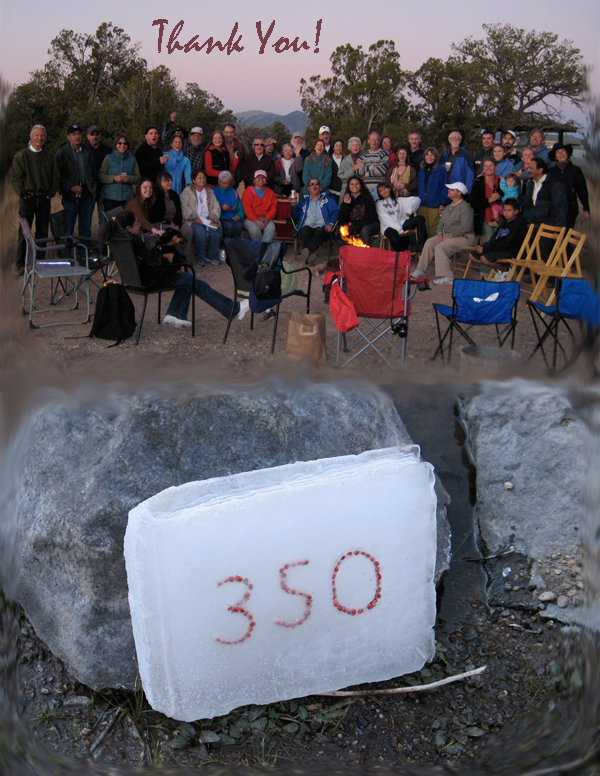
NeoRio 2009 was is an example of a unique collaboration between artists, conservationist organizations, and the Bureau of Land Management Taos Field Office. The event created a wonderful foundation for innovative outdoor collaborative art events that we can now build on.
Thank you to the many open minds and willing and dedicated staff of the Bureau of Land Management Taos Field Office and the New Mexico Wilderness Alliance staff members and volunteers that created NeoRio 2009! Thank you Basia Irland, our featured artist, for sharing her project, “Reseeding/Receding” with us, an informative and poetic combination of innovative material and social sculpture. Thank you to John Wenger for guidance and vision and Dutch oven Enchiladas and to Aron Rael, John Bailey and Craig Chapman for being open to collaboration. Thank you also to our cosponsoring organizations: the Village of Questa, Amigos Bravos, Rio Grande Restoration, Rivers and Birds, Localogy and HEREKEKE.
Thank you to everyone who came to experience and participate in the different aspects of the day! Your presence and and participation provided the alchemy that made the day a success. Let’s do it again next year! Come celebrate art and wilderness and join the conversation at the Wild Rivers Recreation Area September 24th, 25th and 26th for NeoRio 2010.
NeoRio 2009 – description Basia Irland
WILD ART: A Seed Tribute to the River
by Basia Irland

photo by Mad Zoga Studios
On a bright, crisp, fall day under a cloudless, azure sky, thirty-five intrepid souls hike down the rocky El Chiflo trail at the Wild Rivers Recreation Area into the Rio Grande gorge surrounded by steep stone walls. We are carrying neither food nor drink in our backpacks and coolers, but ephemeral sculptures made of ice embedded with native riparian seeds. Once we are gathered on the sandbanks of El Rio, champagne is passed around to toast this struggling river who has given far more than she has to give.
“May you always flow. May you always flow clean. And most of all, may you always flow WILD!!”

These sculptures, entitled receding/reseeding, are frozen river water carved into the forms of open or closed books with an “ecological text” of local seeds, which are launched into the current. The seeds are released as the ice melts. When the plants regenerate and grow along the bank, they help sequester carbon, hold the banks in place, and provide shelter for riverside creatures.
This project emphasizes the necessity of communal effort and scientific knowledge to deal with the complex issues of climate disruption and watershed restoration. I am working with stream ecologists, biologists, and botanists to ascertain which are the best seeds for each specific riparian zone. The title of this work was conceived for “Weather Report,” a groundbreaking exhibition about climate change curated by art critic/author Lucy Lippard for the Museum of Contemporary Art, Boulder, Colorado. For that exhibition, I carved a 250-pound book from clear ice and embedded it with seed “paragraphs” of mountain maple (Acer spicatum), columbine flowers (Aquilegia coerulea), and Colorado blue spruce (Picea pungens). Four people carried the heavy book out into the current of Boulder Creek. As it rested between two large rocks, viewers could see the water flowing under the ice. A photograph of this piece shows three students standing knee deep in the river as they “read” the seed text on the book. Arapahoe Glacier, which provides 60 percent of Boulder’s drinking water, is receding rapidly due to climate disruption. One of the ways to help sequester more carbon and hopefully reduce some of the effects of climate change is through plants: hence, receding/reseeding.
In the ongoing video documentary about this project, we see the carved books in different stages of dissolving and reseeding various sites in Europe and the United States. In June 2009, after viewing the receding/reseeding video at the Albuquerque Museum, sixty participants boarded a bus and arrived at the Rio Grande nearby to witness and help launch eleven ice books. If conditions are right (and ripe), a book will be left to melt into the banks of a river. This was the case in June, when Tome II, a 300-pound ice book with paragraphs of local cottonwood seeds (Populus fremontii), was placed next to the Rio and allowed to melt. It was the season during which the cottonwood seeds would normally begin to take root and germinate. Since the river has been straightened and not allowed its annual overflow into the floodplain, however, cottonwood seeds fall onto dry land under the canopy along much of the Rio Grande and are unable to sprout. The melting ice book recreated, in microcosm, conditions for cottonwood seeds to grow.
The amount of devastation caused to rivers is extraordinary and the need to educate and activate local communities is vast. But as americanrivers.net writes: “Across the country, we are proving that rivers are remarkably resilient, and when given a chance they can thrive once again.”
At the river’s edge on this October day we launch ice books into the cold current one by one. There are seven frozen “pages” with Roman numerals created from desert willow seedpods. (See addendum for a list of the seeds used in the books.) Some people wade out into the flow to place a “manuscript” in the water, while others toss the ice pages from shore. We watch each sculpture disappear downstream. Then three larger books are launched. One has a “text” of lemonade berries (Rhus trilobata) picked a month earlier from nearby bushes, and two have the number 350 written in seeds. As most of us are now aware, 350 parts per million is perhaps the safe upper limit for carbon dioxide in the atmosphere, and we have already surpassed this number. I have also created a series of unfired New Mexico clay books laden with riparian seeds, which we leave along the wet banks to disintegrate back into the earth.
After the hike up out of the gorge, our group meets at the Montosa Campsite on the rim for a scrumptious dinner around the campfire. Craig Chapman and wilderness chef extraordinaire John Wenger cook up an enormous Dutch oven feast of green chile chicken enchiladas and vegetarian tortilla stew. John’s daughter Tuscany has brought two colorful cakes iced that replicate his paintings of the Rio Grande. Huddled around the fire for warmth, we listen to musicians Justin Dean on guitar and Mark Dudrow on cello sing tales about desert life lived in oceans of sage. This fantastic day has been one of new friendships, continuing connections to the Rio Grande, enriching dialogues, and WILD ART!
Addendum: I am humbled to be the first artist honored by the New Mexico Wilderness Alliance and the Bureau of Land Management for my work with the environment. Deep, heartfelt thanks go to artist Claire Long for her organizational skills in working toward visions of local community connectivity; painter John Wenger for inspiring others with his life-long love of wilderness; New Mexico Wilderness Alliance Wild Guide editor Craig Chapman, who (along with the rest of the Alliance staff) is devoting time to raising the amount of New Mexico lands designated as Wilderness from a mere 2 percent; and to BLM Assistant Manager of the Upper Rio Grande Gorge Aron Rael for his enthusiastic support of the arts.
Each participant received a gift packet of seeds with the following information:
This envelope contains seeds for northern Rio Grande riparian zones, which are used in the ice books.
Trees and shrubs:
Lemonade berry, Rhus trilobata
Mountain mahogany, Cercocarpus montanus
Apache plume, Fallugia paradoxa
Rio Grande cottonwood, Populus fremontii
Desert willow, Chilopsis linearis
Grasses:
Alkali sacaton, Sporobolus airoides
Indian ricegrass, Oryzopsis hymenoides
Sheep fescue, Festuca ovina
Blue grama, Bouteloua gracilis
Sideoats grama, Bouteloua curtipendula
Little bluestem, Andropogon scovarius
Streambank wheatgrass, Agropyron riparium
Galleta, Hilaria jamesii
A few of the many informative water Websites are:
waterfootprint.org Carbon footprints are not the only ones that are important! Check out your water footprint.
riogranderestoration.com Working for the betterment of the Rio Grande.
amigosbravos.org Friends of the Wild Rivers is a New Mexico river conservation organization.
nmwaterdialogue.org “Promotes the wise stewardship of water resources in New Mexico.”
xeriscapenm.com The Xeriscape Council of New Mexico promotes water conservation.
riversandbirds.org Experiential watershed education.
waterforpeople.org Assists developing countries with safe drinking water and sanitation.
pacinst.org “The Pacific Institute conducts research and policy analysis in the areas of environmental protection, economic development, and social equity”
Dr. Peter Gleick’s blog is Water by the Numbers
Basia Irland, Professor Emerita, University of New Mexico, creates international water projects featured in her book, Water Library, University of New Mexico Press, 2007. Irland often works with scholars from diverse disciplines building rainwater harvesting systems; connecting communities along lengths of rivers; filming and producing video documentaries; and creating waterborne disease projects around the world, most recently in Egypt, Ethiopia, India, and Nepal. Irland is the recipient of over forty grants including a Senior Fulbright Research Award for Southeast Asia, Woodrow Wilson Foundation Fellowship Grant, and a National Oceanic and Atmospheric Research Grant. She lectures and exhibits extensively. She has filmed and produced eight documentary videos about water. Essays about her work have been included in books published in Germany, England, Switzerland, and the U.S. To learn more about Basia Irland, her work and her recently published book, Water Library, visit www.basiairland.com.
NeoRio 2009 – October 17th

- Top image: view within the Rio Grande Gorge at Chiflo; Bottom image: Cleo reading cottonwood seed text on 300 pound ice book; Photography and design by Claire Long
Neo Rio 2009
art, nature, culture and community in confluence
Wild Rivers Recreation Area, Questa New Mexico
October 17th 2009 1:30 – 9:00 pm
Free and open to all
Join LEAP, a new Environmental Arts Initiative, for NeoRio 2009, celebrating art, nature, creativity, wilderness, and community at Wild Rivers Recreation Area, part of the 235,980 acre proposed Rio Grande del Norte National Conservation Area.
Featuring Artist, Basia Irland: Receding/Reseeding Basia’s carved ice books embedded with local riparian seeds have been launched into rivers across Europe and the US to aid with river restoration. The project now comes to Wild Rivers.
Event Schedule (at Wild Rivers Visitor Center unless otherwise noted)
1:30 Welcome from Bureau of Land Management, presentations from New Mexico Wilderness Alliance, Village of Questa, and Ester Garcia
2:00 Presentation and short film by featured artist, Basia Irland
3:00 Receding/Reseeding participatory art event, at the Rio, El Chiflo
5:30 Potluck and campfire, at Montoso Campsite
7:00 Live music by Justin Dean and Mark Dudrow, at Montoso Campsite
We will provide dutch oven-baked green chile chicken, red chile beef and vegetarian enchiladas. Vegans can be accommodated with adequate notice. Please bring your own favorite potluck dish, camp chair, plate, cup and utensils. Day-use fee waived; camping is available.
Hosted and sponsored by Bureau of Land Management, New Mexico Wilderness Alliance and LEAP (Land, Experience and Art of Place). Cosponsored by the Village of Questa, Amigos Bravos, Rio Grande Restoration, Rivers and Birds, Localogy and HEREKEKE.
For more information email leapsite@gmail.com or call 575-586-1150
Land, Art and Experience of Place
Inspired by a sense of wonder, and a commitment to creativity and sustainability, LEAP is an experimental, interdisciplinary, artist-driven, initiative. LEAP arts events, adventures and classes are set to explore, in a variety of forms, the richness and diversity in the ecology of the places where they occur: wilderness, flora and fauna, ancient and contemporary cultures, geology, the strands of our community and the interdependence of all of these things.
LEAP seeks to deepen our appreciation and understanding of and relationship to and our environment and our human and non-human neighbors; to increase our commitment to protecting these places and relationships and fostering creative responses and expresses of them in contemporary art and culture.
LEAP is intended to function as an interdisciplinary networking hub, connecting artists with conservationists, Land Management organizations and practitioners in other fields. A passion for experiencing and protecting wilderness is at its core.
LEAP works with art as a form of fieldwork and an investigative technique for research with expanded parameters and outcome possibilities. Artists, as cultural creatives, are encouraged to team-up with practitioners in other fields to explore, document, study and “express” different environments, areas and problems. LEAP investigates and actively examines the meaning and applications of the word “resource” and “management.”
Place, environment and the particularities of locality are central to this program. According to Einstein, “All action is local.” For many artists, nature is a great source of inspiration, but through LEAP artists and the public alike are encouraged, to go beyond observation; to interact with, participate and volunteer in the places around them. Familiarity is the first step toward appreciation and appreciation is the first step towards conservation.







 LEAP
LEAP 